pm2.5 in this room
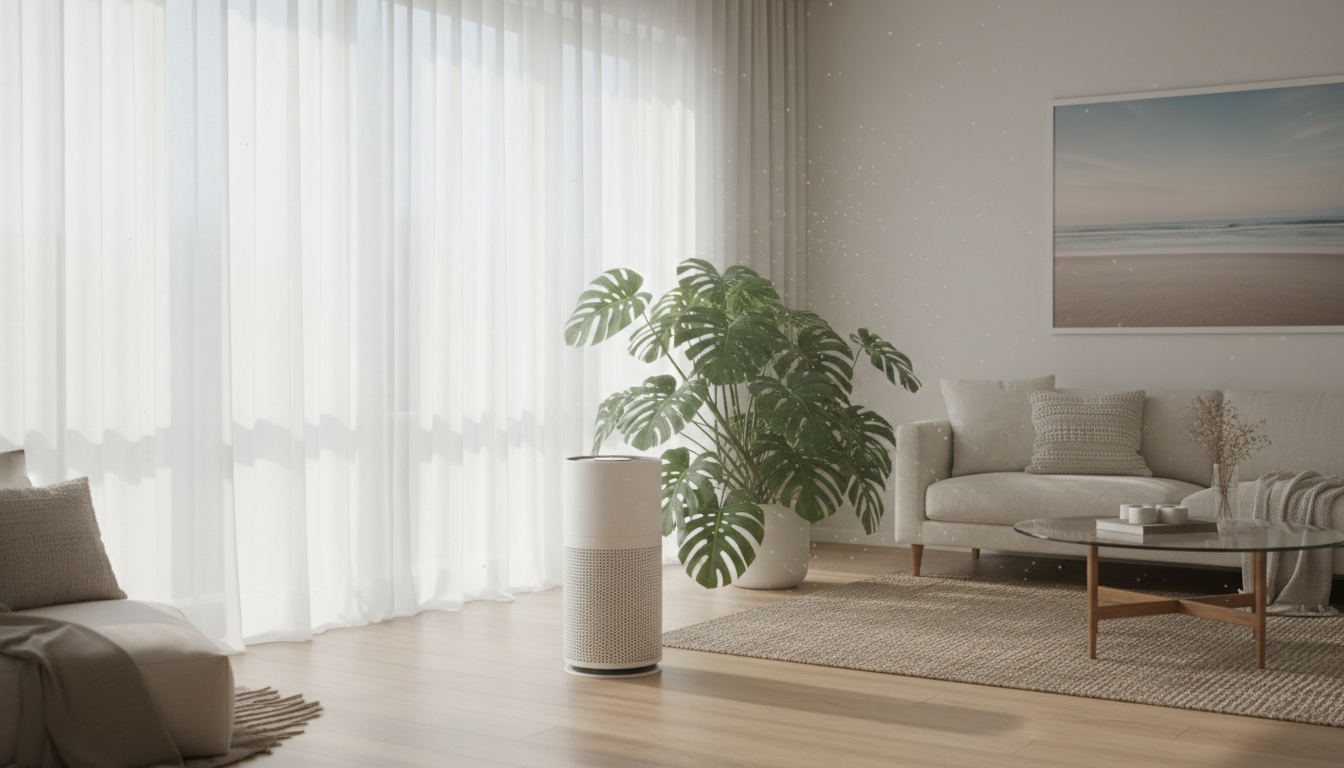
You can only see air in a sunbeam.
This room looks clean. So does yours. The beam knows better. Try doing what you do every day.
scroll · size the machine
This room looks clean. So does yours. The beam knows better. Try doing what you do every day.
That is 4.0 air changes every hour, the rate where dust, pollen and cooking smoke stop accumulating. Boxes often print it as 141 CFM. Buy any honest machine that clears it.
Clears a bedroom on the setting you can sleep next to, because the purifier you switch off at night filters nothing.
A plain box with a big fan and a real filter. No ionizer theater, just airflow per dollar for living rooms.
Two mid machines at opposite ends beat one monster on circulation, noise, and price. The honest big-space answer.
Smoke CADR is the only number on the box that gets third-party tested. Ionizer and plasma modes are treated here as decoration. Every pick lists five-year cost, filters included, because a cheap machine with expensive filters is not cheap. Links may earn a commission at no cost to you; no brand buys a place on the sill.